
Today we are taking a look at fully funded scholarships in Europe because studying abroad is one of the biggest dreams many students have. You get to study in a top university, meet people from all over the world, and open the door to better career opportunities. But the truth is, studying abroad is very expensive. Most students can’t afford to pay tuition fees, accommodation, flight tickets, and living costs all by themselves.
That’s where scholarships come in. Fully funded scholarships make it possible for students to study abroad without paying a single dollar. These scholarships cover everything, tuition, accommodation, flight tickets, and even monthly stipends for your living expenses.
But here’s the real question: how do you actually find and apply for these fully funded scholarships in countries like the USA, UK, Canada, and Europe?
That’s what this post will help you understand. I’ll walk you through the exact steps, the right platforms, and the details that make your application stand out.
Let’s begin.
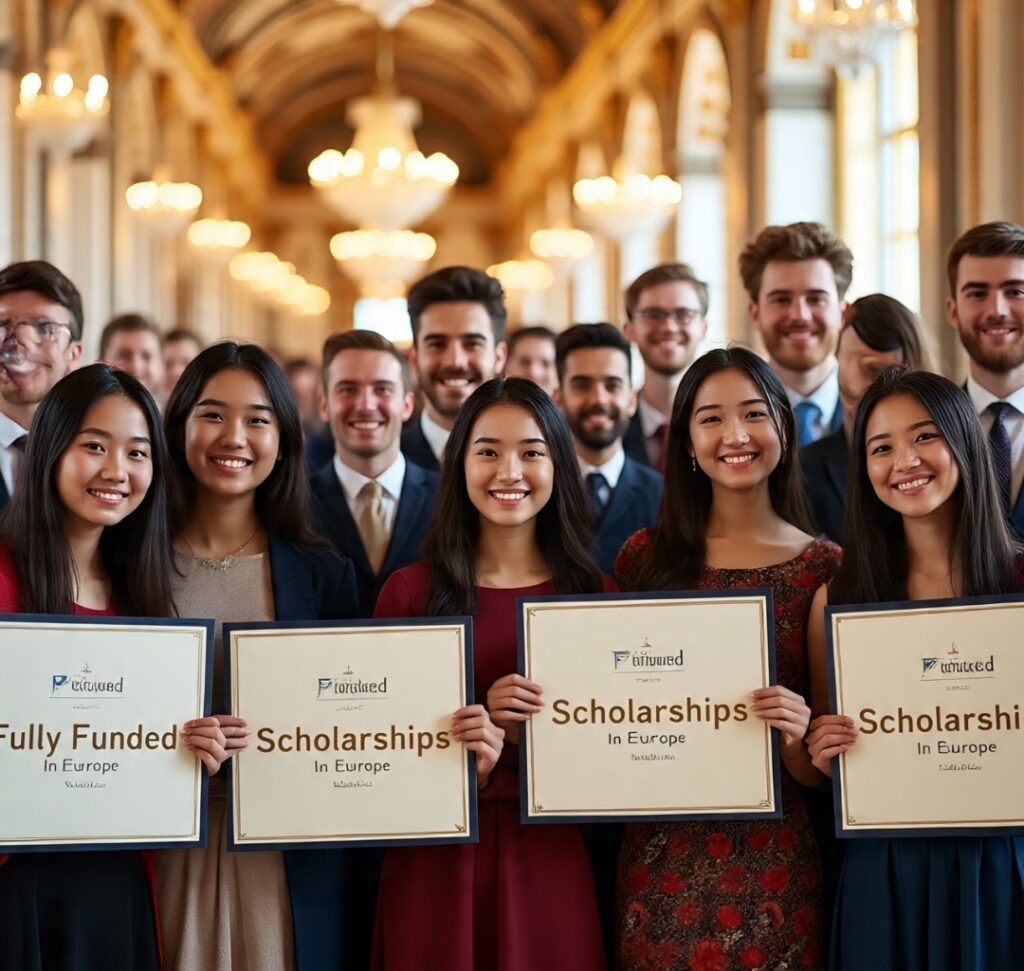
Fully Funded Scholarships In Europe

What Is A Fully Funded Scholarship
Before you start searching, it’s important to understand what fully funded really means.
A fully funded scholarship means all your expenses related to studying abroad are covered. This usually includes:
- Full tuition fees
- Accommodation and living costs
- Health insurance
- Round-trip flight tickets
- Books and research allowance
- Sometimes, even personal expenses
In other words, you don’t need to pay for anything, everything is handled for you.
Steps To Find And Apply For Fully Funded Scholarships In Europe
Step 1: Understand The Type Of Scholarship You Want
There are different kinds of scholarships, and not all of them are the same. Some are for undergraduate students, some for master’s, and others for PhD or research programs. Some are funded by governments, while others are from universities or private organizations.
Here are the main types:
1. Government Scholarships: These are offered by countries to attract international students. Examples are the Fulbright Program (USA), Chevening (UK), Erasmus Mundus (Europe), and Vanier (Canada).
2. University Scholarships: Many universities give their own scholarships to international students. Examples include Oxford University’s Clarendon Scholarships, Stanford Knight-Hennessy Scholars, and the University of British Columbia’s International Leader of Tomorrow Award.
3. Private and NGO Scholarships: Some companies and non-governmental organizations sponsor students. Examples include Mastercard Foundation Scholarships, Rotary Foundation Scholarships, and the Joint Japan/World Bank Scholarship.
Knowing what kind of scholarship you want helps you focus your search and saves time.
Step 2: Start Your Search Early
The biggest mistake students make is waiting too long before searching for scholarships. Most scholarship deadlines are several months before the school year starts.
If you want to study in 2026, for example, you should start looking and preparing in 2025. This gives you enough time to gather documents, write essays, and meet deadlines.
You can start your search in these trusted places:
1. Official government scholarship websites (like educationusa.state.gov or studyuk.britishcouncil.org)
2. University websites (go to the financial aid or international scholarships page)
3. Reliable scholarship databases like:
- scholarships.com
- Scholars4dev.com
- Opportunitiescorners.info
- Afterschoolafrica.com
Don’t rely only on social media posts or random blogs. Always confirm details from the official website.
Step 3: Check The Eligibility Requirements
Every scholarship has its own requirements. Some look at your academic results, while others look at leadership skills, community service, or financial need.
Here are some common eligibility requirements you’ll find:
- Must be a citizen of a specific country (for example, Nigeria)
- Must have strong academic results (good grades)
- Must show leadership potential or community involvement
- Must meet language requirements (IELTS, TOEFL, or equivalent)
- Must have a valid international passport
- Must be willing to return home after your studies (for government scholarships)
Before applying, always make sure you qualify for every requirement. If not, your application may not even be reviewed.
Step 4: Gather Your Documents
Documents play a big role in how successful your application will be. If your documents are incomplete or disorganized, it can ruin your chances even if you’re qualified.
Here are the most common documents you’ll need for any scholarship:
- Academic Transcripts: Your school or university results.
- Certificates: WAEC, BSc, MSc, or any relevant degree.
- Recommendation Letters: Usually from your teachers, lecturers, or supervisors.
- Personal Statement or Essay: A short essay explaining who you are, what you want to study, and why you deserve the scholarship.
- Passport or National ID: For identification.
- CV or Resume: Summarizing your achievements, skills, and experiences.
- Proof of English Proficiency: IELTS, TOEFL, or Duolingo test score (if required).
Prepare these early and keep both digital and printed copies.
Step 5: Learn How To Write A Great Personal Statement
Your personal statement or essay is your chance to tell your story. Most scholarships use it to decide if you’re the right candidate.
Here’s how to make yours stand out:
- Start with your background. Share who you are and where you’re from. Be real and honest.
- Explain your academic and career goals. Tell them what you want to study and how it connects to your dreams.
- Show your impact. Talk about what you’ve done in your community, any volunteering, or leadership roles.
- Connect your goals with the scholarship’s mission. For example, if the scholarship supports future leaders, explain how your work or ambition fits that.
- Keep it personal and simple. Avoid copying sample essays from the internet. Write your own story in your own voice.
Remember, scholarship committees read thousands of essays. What makes you stand out is your story, not big grammar.
Step 6: Apply Directly Through Official Channels
When you find a scholarship you’re eligible for, make sure you apply through the official website or link.
Avoid agents or random people who claim they can “help you get a scholarship” for money. Genuine scholarships are always free to apply for.
Steps you’ll usually follow include:
- Create an account on the scholarship website.
- Fill out the online application form.
- Upload your documents.
- Submit your personal statement or essay.
- Review everything carefully before submitting.
After applying, you’ll receive a confirmation email or tracking number.
Step 7: Prepare For Interviews
Some fully funded scholarships have interviews to select the final candidates. It might be an online or in-person interview.
Here’s how to prepare:
- Learn about the scholarship organization or university.
- Review your application, they may ask questions based on it.
- Be ready to talk about your academic goals and how you’ll use your education to make an impact.
- Dress properly and be confident.
Most interviews are friendly and focus on getting to know you better.
Follow Up
Keep a record of all the scholarships you’ve applied for, their deadlines, and responses.
You can use a notebook or spreadsheet to track things like:
- Scholarship name
- Deadline
- Documents submitted
- Interview dates
- Result date
If you haven’t heard back after the expected time, you can send a polite follow-up email to ask about your application status.
Not everyone gets accepted the first time they apply, and that’s perfectly fine. Even the best students get rejections.
If you don’t get a scholarship, learn from the experience. Recheck your documents, improve your essay, and try again next year. Many students finally win after multiple tries.
Consistency and patience always pay off.
Scholarship Scams
Unfortunately, there are fake scholarships out there, especially targeting students from developing countries.
Here’s how to spot and avoid them:
- They ask you to pay money before applying, that’s a red flag.
- The website has no official links or contact details.
- The offer sounds too good to be true (like “100% guaranteed admission”).
- The email address looks suspicious (e.g., not from a real university domain).
Always cross-check information with official university or government websites.
Top Fully Funded Scholarships You Can Apply For
Now that you know how to find and apply, here are some of the best scholarships to consider:
- Fulbright Foreign Student Program (USA)
- Chevening Scholarships (UK)
- Erasmus Mundus Joint Master’s (Europe)
- Vanier Canada Graduate Scholarships (Canada)
- DAAD Scholarships (Germany)
- Commonwealth Scholarships (UK)
- Mastercard Foundation Scholars Program (Africa & Global)
- Rhodes Scholarships (University of Oxford)
- Clarendon Scholarships (Oxford University)
- Lester B. Pearson International Scholarship (University of Toronto)
Each one has its own website, requirements, and process, so always check their official pages for current updates.
Conclusion
Finding and applying for fully funded scholarships in the USA, UK, Canada, and Europe takes time and effort, but it’s 100% possible. Thousands of students win these scholarships every year, including Nigerians and other Africans.
The key is to start early, stay organized, and tell your story with honesty and passion. So take that first step today. Search for a scholarship, read the requirements, and start preparing your documents. You might be surprised how far your determination can take you.